

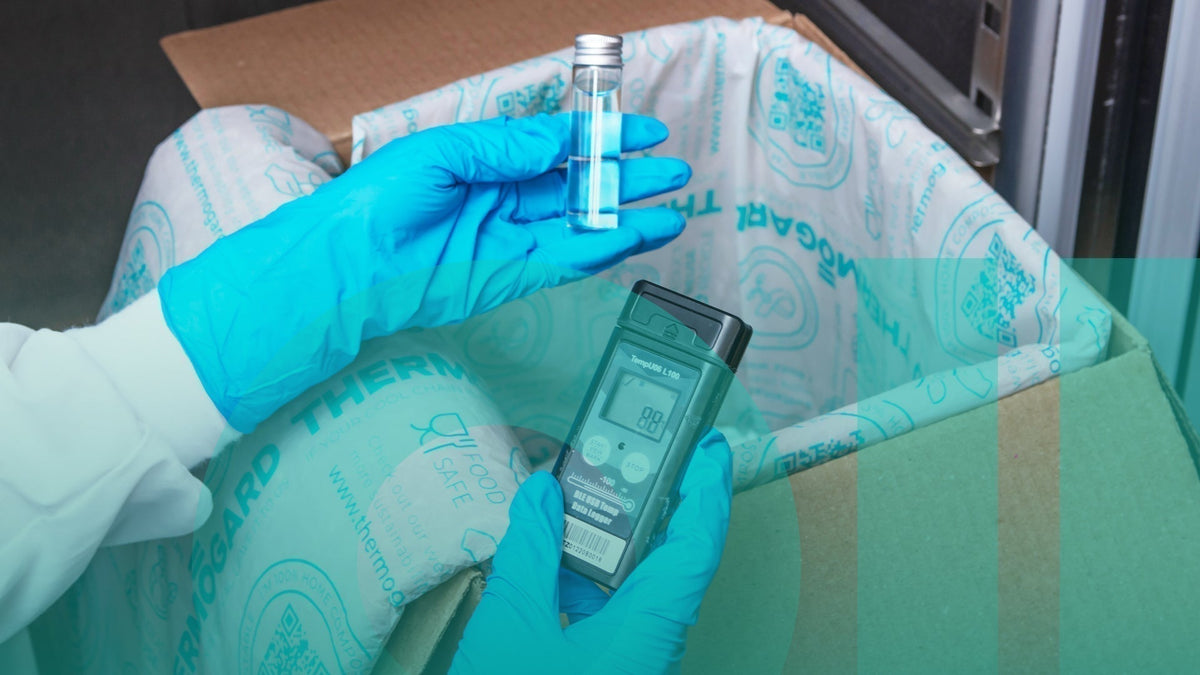
Wool Liner System for Direct-to-Patient Shipping
PROJECT OVERVIEW
Direct to patient pharmacies increasingly move compact, high value medicines through parcel networks designed for ordinary consumer deliveries. Unlike palletized healthcare freight, these shipments may spend most of the journey outside active temperature control and are ultimately received by a patient rather than a trained warehouse team. The secondary packaging therefore has to protect temperature, physical condition, and user confidence within one small format.
A healthcare partner required a lightweight chilled mailer for boxed injectable medicines. The system needed to maintain 2°C to 8°C through a 24 hour delivery window in warm ambient conditions, while reducing reliance on rigid polystyrene and providing a practical format for residential delivery and disposal.
PROJECT REQUIREMENTS
The programme called for a complete pack out built around a 1600 gsm wool insulation pouch, one 1 kg gel ice pack, and a card divider between the coolant and payload. The pouch needed to fit inside a biodegradable outer courier bag and remain compact enough for parcel delivery, with external dimensions of 280 x 390 mm and an internal cavity of 250 x 360 mm.
Performance could not be achieved by adding cold mass alone. The design needed to limit direct conductive exposure from frozen coolant, protect medicine cartons from movement and crushing, and remain simple enough for repeatable pharmacy fulfilment. Material selection also had to support sustainability objectives without weakening thermal performance.
UNIQUE PROJECT CHALLENGES
Small pharmaceutical payloads are thermally unforgiving. Their limited thermal mass allows them to respond quickly to both frozen coolant and ambient heat. Direct contact can pull medicine below 2°C early in transit, while excess void space or weak closure geometry can accelerate warming once the coolant begins to lose capacity.
The central challenge was controlled separation. Too little barrier increases freeze risk, while too much restricts useful cooling and shortens the later stage of the profile. In a flexible pouch, the position of the gel pack, divider, and product also has a greater influence on local temperature than it would inside a large rigid cavity.
The final test produced a 6.9 hour spread between the earliest and latest probe to leave the required range. This reinforced an important qualification principle: average payload temperature can conceal local variation, so the warmest product position must govern the usable duration.
THERMOGARD SOLUTION
Thermogard developed a compact four component system consisting of a 1600 gsm wool insulation pouch, a biodegradable courier outer, one 1 kg gel ice pack, and a cardboard divider. The frozen coolant was positioned on one side of the divider, with two boxed medicine units protected within the adjacent payload space.
Wool was selected for its ability to hold pockets of still air within its fibre structure, slowing heat transfer while its natural loft provided mechanical cushioning. The compact pouch kept insulation close to the payload and avoided heating a large unused cavity. The divider moderated direct conduction from the gel pack and created a clear loading sequence for fulfilment teams.
The design treated coolant condition, bench time, divider placement, and closure as part of one thermal system, recognising that small shipper performance depends on configuration rather than insulation alone.
VALIDATION
Thermal validation was completed in a constant heat chamber averaging 25.8°C. Two boxed injectable medicine units were conditioned to 3.5°C, while the 1 kg gel pack was benched for 15 minutes before packing. Three probes were positioned around the payload to capture variation within the product space rather than relying on a single central reading.
At 24 hours, all three payload locations remained within the required range, recording 7.4°C, 6.4°C, and 6.2°C. Total time between 2°C and 8°C was 29.9 hours at the earliest probe, 35.4 hours at the second, and 36.8 hours at the third. The warmest position therefore provided nearly 6 hours of margin beyond the intended 24 hour window.
END RESULT
The completed Wool Pharma Pouch System provided a compact alternative to a rigid foam shipper for direct to patient delivery of chilled medicines. It combined controlled coolant separation, mechanical protection, and validated warm ambient performance in a format suited to parcel fulfilment and residential receipt.
The project also demonstrated that wool can form the basis of a credible pharmaceutical pack out when the complete system is engineered around the payload. The design now provides a reference platform for similar small format medicines, subject to application specific qualification whenever payload, lane, coolant condition, or transit duration changes.
GALLERY

Read more

New England Biolabs Australia is the regional division of a global life sciences company founded in the 1970s. The organisation supplies essential reagents and materials used in DNA and RNA researc...
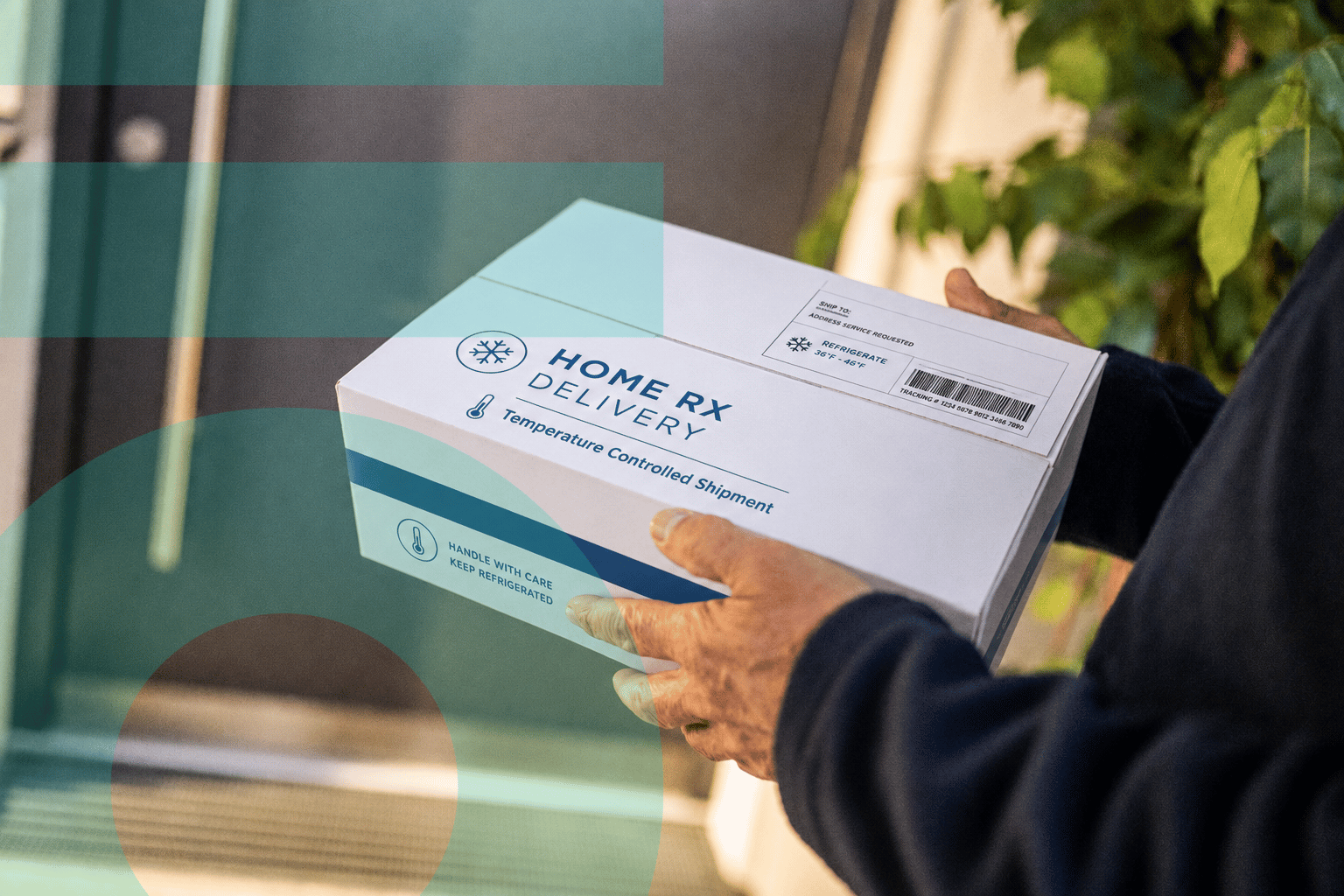
Direct to patient pharmacy suppliers often move very small, high value payloads through ordinary parcel networks. A syringe or vial may occupy only a fraction of the shipper, yet the system must ke...

The central challenge was consistency across 15 fulfilment sites. The client was already shipping temperature sensitive medicines at scale across North America, but variations in coolant conditioni...