

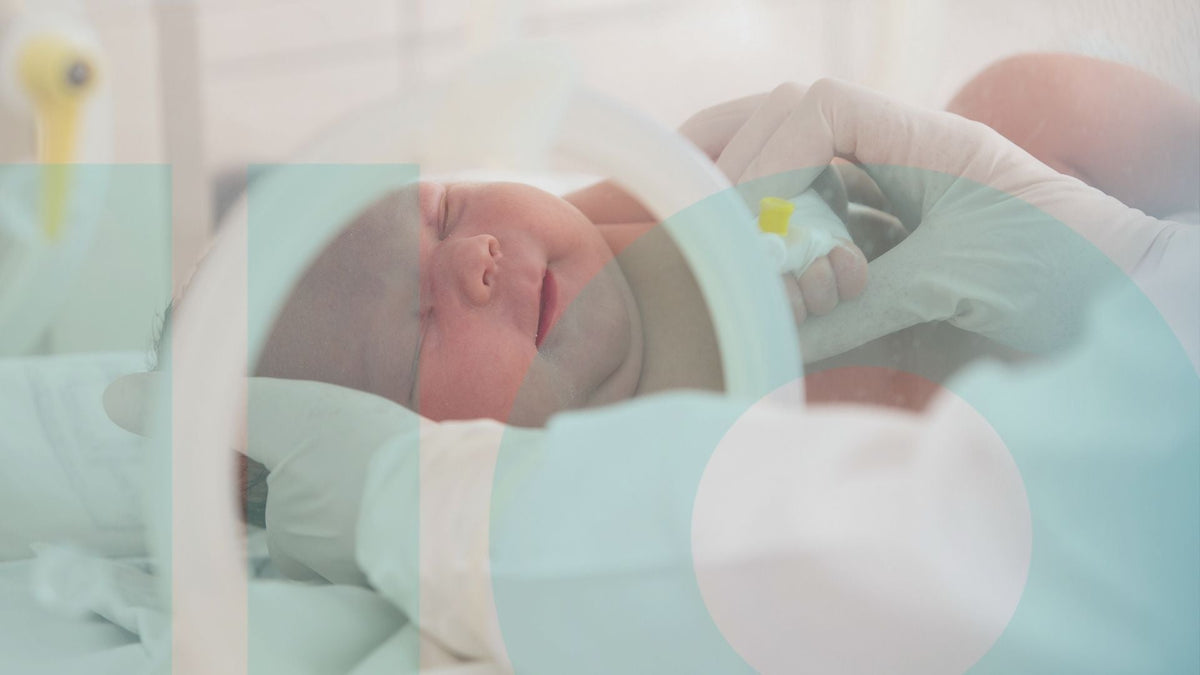
Warm-Chain Stem Cell Collection Kit
PROJECT BACKGROUND
A cord blood collection kit has an unusual journey. It is sent to an expectant family, taken into a birthing suite and returned to a specialist laboratory carrying biological material collected at a moment that cannot be repeated. Throughout that journey, temperature control matters, but conventional refrigerated shipping is not the answer.
A major Australian family stem cell banking provider asked Thermogard to review the transport kit used to move freshly collected umbilical cord blood and tissue from hospitals around the country to its processing facility. The bank offers families the opportunity to preserve these samples for potential future medical use, making the integrity of the original collection particularly important.
The existing expanded polystyrene (EPS) packout provided insulation, but its bulk, weight and presentation no longer suited the intended customer experience. The brief called for a more sustainable replacement, a more practical kit to carry and a refreshed outer package that could communicate the handling requirements more clearly to families, clinical staff and couriers.
PROJECT REQUIREMENTS
Unlike the 2°C to 8°C specification common in pharmaceutical cold chain, the collection materials needed a controlled ambient transport range of 4°C to 25°C for at least 24 hours. The network included regional and metropolitan routes across Australia, with summer ambient exposure potentially reaching 40°C in northern locations.
The redesigned kit also needed to reduce unnecessary carton size and weight, retain sufficient room for collection materials and be manageable in a maternity setting. Multiple births added a practical complication: a kit that is already cumbersome becomes harder to transport when additional collection materials are required.
Presentation was part of the requirement rather than a cosmetic extra. The same carton passes between a family, a healthcare professional and a courier, so its appearance and instructions need to convey that the contents are medically important and that the correct handling temperature is not the same as for refrigerated medicines.
UNIQUE PROJECT CHALLENGES
The temperature brief reversed the usual cold chain instinct. Fresh biological collections must be protected from excessive heat without being exposed to unnecessary chilling or freezing. Simply adding frozen gel packs could create a different risk, while leaving the samples in an unprotected carton would make performance dependent on weather, dwell time and vehicle conditions.
The starting condition also mattered. In Thermogard’s proposed modelling scenario the payload began at 35°C, while packaging and temperature-stabilising materials began at 18°C. The design therefore had to manage an initial transition into the required transport band and then moderate temperature changes through the remainder of the journey. Achieving that balance is different from holding an already chilled product at a constant setpoint.
There was a second, more visible challenge. EPS offered insulation but little opportunity to improve the experience of receiving, carrying and returning the collection kit. A lighter, better presented format had to remain protective while giving different handlers a clear understanding of what the package contained and how it should be treated.
THERMOGARD SOLUTION
Thermogard approached the project as a redesign of the complete collection kit, not a direct substitution of one insulation material for another. The proposed solution brought together a compact, custom-printed die-cut corrugated carton, PaperShield Ultra fibre insulation and purpose-selected phase change materials (PCM) to moderate temperatures around the payload.
The paper-based insulation replaced the bulky EPS structure with a format made from recycled cardboard fibres, while still providing cushioning and thermal resistance. The concept offered approximately 2.5 litres of internal capacity, allowing the necessary collection materials to travel in a more considered package without building the entire design around oversized protective foam.
Instead of conventional frozen coolant, the PCM system was selected for controlled ambient-temperature transport. Its role was to absorb and release heat as conditions changed, helping the package resist summer exposure while avoiding the assumptions built into refrigerated shipping. The specific PCM arrangement and pack geometry were developed together as part of the thermal design.
The refreshed outer carton was equally important. Custom printing created space for clearer kit identification, temperature handling guidance and return instructions, with a presentation appropriate for a specialist medical service delivered directly to families. In this application, the packaging had to work as both thermal protection and a simple communication tool.
VALIDATION
Thermogard evaluated the proposed kit in ThermalIQ against a 24-hour ISTA 7D Summer profile, using proprietary materials as thermal surrogates.
The simulated payload temperatures fell from their elevated starting condition into the specified ambient transport band and then remained below the 25°C upper threshold for the rest of the summer profile. The concept presentation reported a 24-hour result below 25°C, providing a useful engineering basis for progressing the design.
These results were generated through thermal modelling, not customer-lane physical qualification or biological viability testing. The early cool-down shown in the model and performance under cooler seasonal conditions would need to be assessed as part of subsequent qualification before claims could be made across the full national transport network.
END RESULT
The design work established a credible alternative to the existing EPS collection kit: recycled-fibre insulation, engineered ambient-temperature control and a custom-printed outer carton in one coherent package. It addressed the thermal requirement alongside practical handling, presentation and material choice, rather than solving each in isolation.
The modelled summer result demonstrated how a room-temperature biological shipment could be protected without defaulting to conventional chilled packaging. It also gave the project a clear basis for physical qualification and refinement of the final transport and handling instructions.
For a service built around a one-time collection at birth, that distinction matters. The best packaging is not simply the box that insulates most heavily, but the system that keeps the sample within its required conditions and makes correct handling easier for everyone who touches it.
Read more

A major member-based Australian pharmacy group sought a consistent cold chain packaging approach across its multi-state retail network.

A major Australian pathology provider needed a more reliable way to move temperature sensitive diagnostic specimens across its collection and laboratory network. Thermogard reviewed the full transp...

The central challenge was consistency across 15 fulfilment sites. The client was already shipping temperature sensitive medicines at scale across North America, but variations in coolant conditioni...