

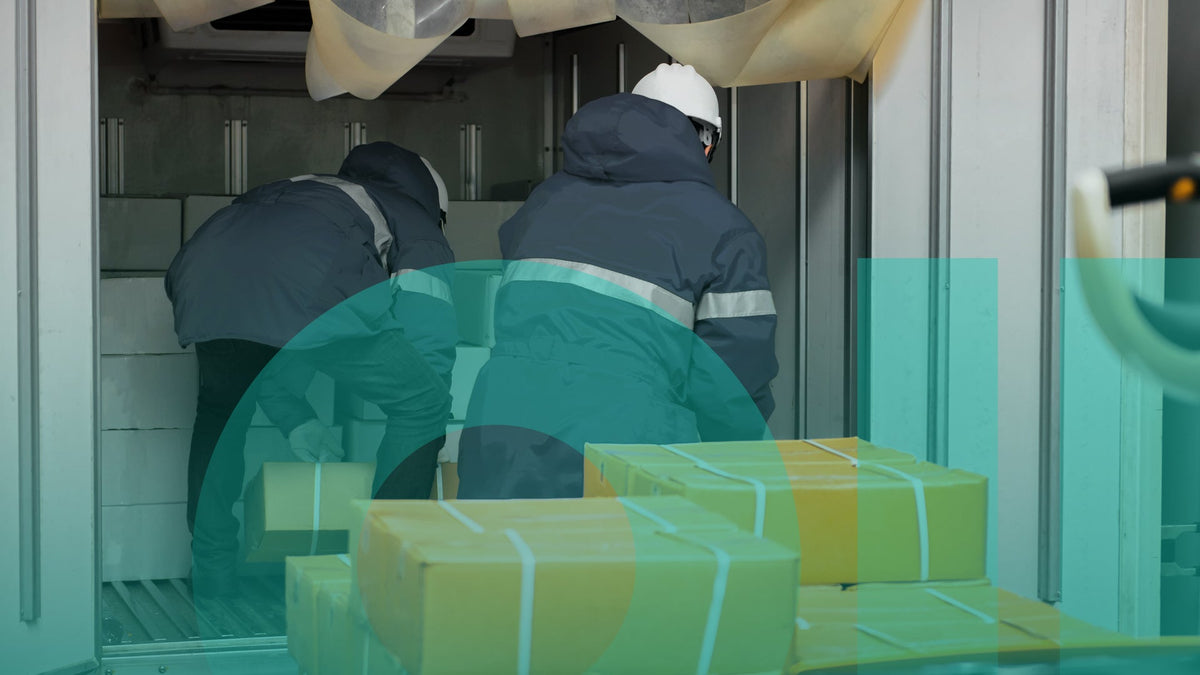
Designing Cold Chain for Carriers You Cannot Control
Cold chain systems are often designed under ideal assumptions; however, the reality of shipments can differ dramatically from the validation process.
In validation scenarios, transit times are often predictable, handoffs are clean, parcels move quickly through carrier hubs and spend minimal time exposed to ambient conditions. In practice, very little of that is guaranteed.
Carriers run late, trucks sit in the sun, parcels wait on sorting belts during peak season, and packages spend hours in delivery vehicles that were never designed for temperature-controlled cargo.
The uncomfortable reality is that cold chain reliability depends heavily on networks that packaging engineers cannot control. The question becomes how to design for that reality.
Transit time is rarely the real problem
Most packaging systems are built around an expected delivery window. 24 hours, 48 hours, perhaps 72 hours. But the issue is rarely the scheduled transit time; it is the unscheduled time.
A box may sit in a fulfillment staging area longer than planned. A regional hub may delay dispatch by several hours. A delivery vehicle may complete its route in late afternoon heat rather than early morning conditions.
Individually, these delays seem minor. Together they compress the margin that protects the payload.
Designing cold chain around nominal delivery time creates fragile systems. Designing around exposure time builds resilience.
The worst lane defines the system
Carrier networks are not uniform. Some lanes move smoothly every day. Others regularly experience congestion, weekend holds, or temperature exposure during cross dock transfers.
It is tempting to design packaging around the average shipment. The problem is that systems rarely fail on the average lane.
They fail on the one that behaves differently.
Experienced cold chain teams identify the poorest performing lanes early and use them as the design reference point. If a system survives the most difficult route in the network, it will usually perform everywhere else.
Thermal mass must match network behaviour
Coolant design is often treated as a simple question of quantity, i.e. add more gel packs and the problem disappears.
In reality, the relationship between coolant mass and network behaviour is more nuanced. Too little coolant allows heat gain to accelerate during dwell periods. Too much can introduce freezing risk or unnecessary shipping weight.
The real goal is not maximum cooling capacity; it is thermal balance.
This means placing coolant where heat gain is most likely to occur and designing the pack out so that temperature change happens slowly and predictably.
When the network becomes unpredictable, controlled thermal behaviour becomes the most valuable property a packaging system can have.
Barrier design protects the payload when conditions change
Insulation slows heat transfer, but barriers control how that heat enters the system.
Small design details matter more than most teams expect. Lid seams, sidewall gaps, and poorly separated coolant zones can all accelerate temperature drift during extended dwell.
In a stable carrier environment these weaknesses may never be noticed. Under peak season conditions they quickly reveal themselves. Barrier design is one of the most overlooked contributors to cold chain reliability.
Operational discipline matters just as much as engineering
Even the most carefully engineered pack out can fail if execution drifts. Coolant that warms on a packing line. Insulation that is not seated correctly. Boxes that remain staged near open dock doors longer than planned.
Carrier variability increases stress on the system, but operational consistency determines whether the system can absorb that stress.
The strongest cold chain operations treat packaging design and fulfilment process as part of the same system.
The pattern that emerges
Cold chain reliability rarely fails because carriers are unreliable. Carrier variability has always existed. The difference is whether packaging systems are designed to absorb it.
Teams that design for ideal conditions often experience seasonal complaint spikes, unexpected spoilage, and inconsistent performance across lanes.
Teams that design for the network they actually operate in see something different.
Stable temperatures. Predictable performance. And systems that continue to hold up even when the carrier network does not behave as planned.
Cold chain engineering is not about controlling the carrier.
It is about designing packaging that performs when the carrier cannot be controlled.
Read more
Growth from 500 boxes a week to 5,000 rarely fails because demand disappears; it stalls because the system underneath was never designed to carry that load. At lower volumes, small inefficiencies ...
Most brands don’t outgrow their product; they outgrow their systems.

India has long been an important part of the global pharmaceutical industry, particularly in the manufacturing and supply of medicines. Now, the country is investing in another critical part of pha...